
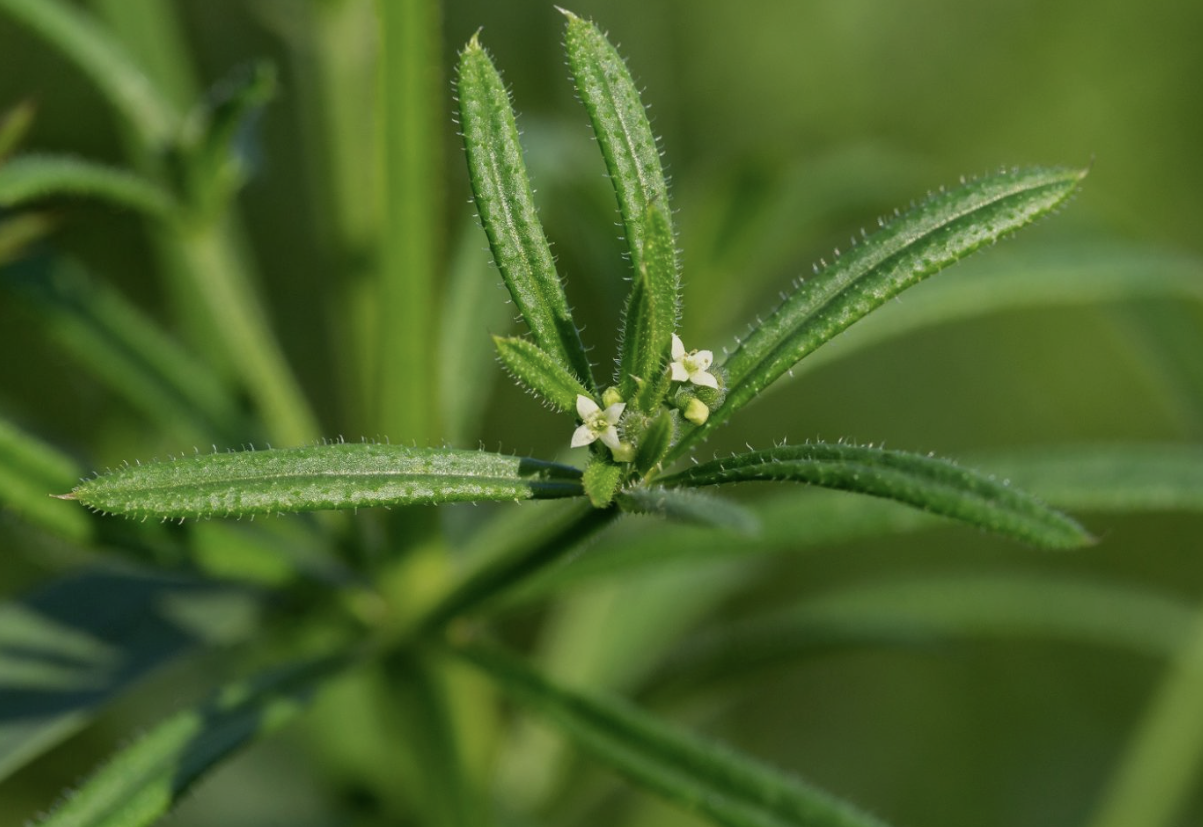
Cleavers and the Wisdom of Gentle Flow
Some herbs feel inseparable from the season in which they appear.
Cleavers is one of those herbs.
Fresh, bright, tender, and a little wild, cleavers arrives in spring just as the earth begins to soften and life starts moving again. It often grows in hedgerows, gardens, and untended edges, tangling itself into the landscape with its delicate stems and clinging leaves. It is easy to overlook if you do not know what you are looking for. But once you begin to recognize it, it feels like a quiet messenger of the season.
Cleavers carries the feeling of spring itself: movement, moisture, awakening, and the gentle encouragement to let what has been held begin to flow.
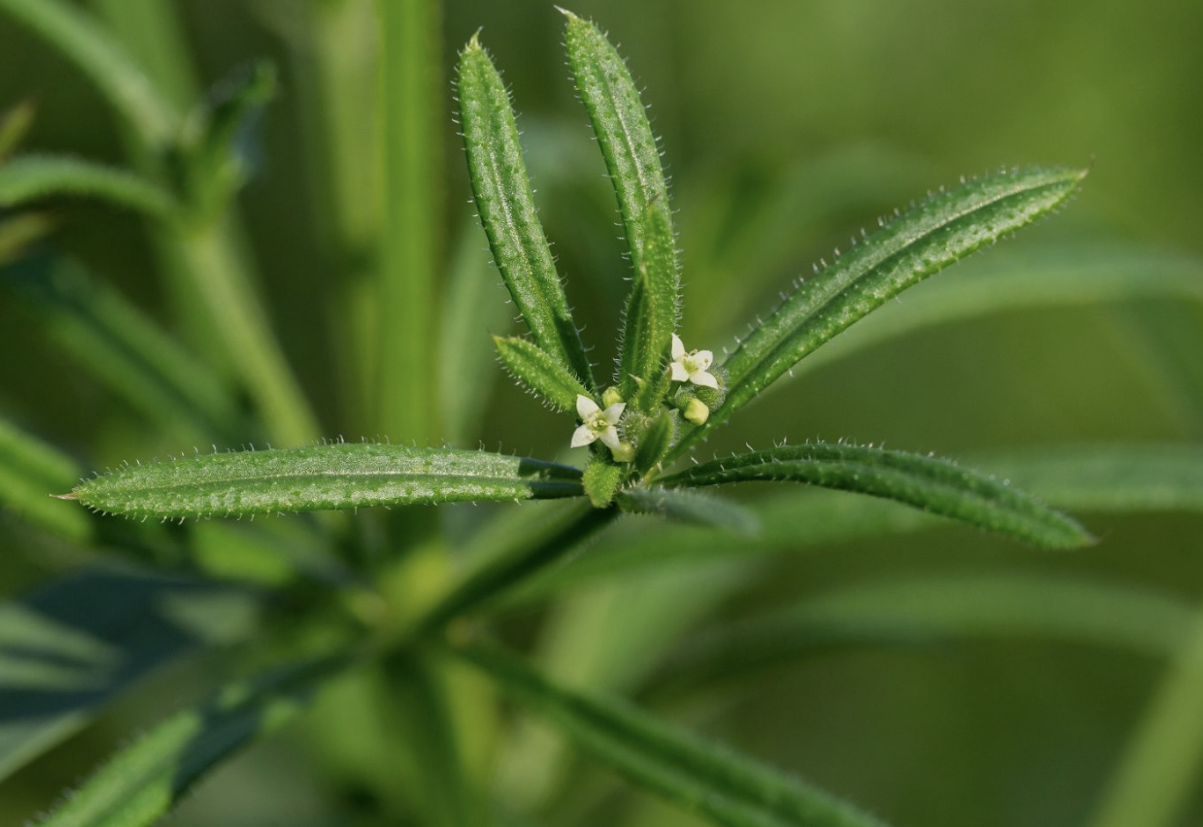
What Is Cleavers?
Cleavers (Galium aparine) is a traditional Western herb often associated with lymphatic support, fluid movement, and seasonal clearing. It has long been used as a fresh spring herb to help the body transition out of winter heaviness and into a more mobile, responsive state.
Its taste and energy are not aggressive. Cleavers does not feel like a harsh detox herb. It is soft, cooling, moistening, and gently moving. This is part of what makes it so beautiful for spring. It supports the body without pushing.
In Western herbalism, cleavers is often turned to when there is:
sluggish lymphatic movement
puffiness or fluid retention
seasonal congestion
a sense of stagnation or heaviness
skin that seems burdened or reactive
a need for gentle spring clearing
Its reputation is rooted in movement—but movement through gentleness rather than force.
Cleavers and the Spring Season
Spring is a season of thawing.
After winter, the body is often still carrying some of the qualities of the colder months: heaviness, dampness, density, sluggishness, and accumulation. In Ayurveda, we understand this through the lens of Kapha season. Kapha carries the qualities of earth and water—cool, moist, heavy, soft, and slow. As winter gives way to spring, these qualities begin to loosen.
This is one reason spring can bring symptoms like congestion, puffiness, sluggish digestion, water retention, brain fog, excess mucus, and the feeling of being a little stuck.
Cleavers fits beautifully into this seasonal moment because it supports one of the body’s most important spring needs: flow.
It does not blast open the system. It does not demand a dramatic purge. Instead, it encourages movement where there has been holding. It helps restore a sense of fluidity where there has been stagnation. It supports the body’s own intelligence as it transitions from winter accumulation into spring circulation.
An Herb of Lymphatic Support
One of the reasons cleavers is so beloved in spring herbalism is its traditional affinity for the lymphatic system.
The lymphatic system plays an essential role in fluid movement, immune function, and the body’s clearing processes. When lymphatic movement is sluggish, a person may experience puffiness, swelling, stagnation, tenderness, a sense of fluid congestion, or simply that feeling that the body is not moving things along as well as it could.
Cleavers is often considered one of the classic herbs for helping support this kind of gentle movement.
Its action is not dramatic. It is more like an herbal nudge—encouraging the body toward circulation, responsiveness, and a more efficient sense of inner flow. This is one of the reasons cleavers has been traditionally used in springtime, when many people feel the lingering density of winter and benefit from support that is light, fresh, and mobilizing.
Cleavers Through an Ayurvedic Lens
Cleavers is not a classical Ayurvedic herb, but I find it very easy to appreciate through Ayurvedic principles.
Ayurveda teaches us to pay close attention to qualities. In spring, many people are experiencing an increase in Kapha qualities: heaviness, dampness, congestion, lethargy, slowness, and stagnation. The goal of spring support is often to restore balance by gently introducing qualities that help create movement, lightness, clarity, and circulation.
Cleavers aligns beautifully with this need.
While it is not especially warming in the way many classical Kapha-reducing herbs are, it supports the movement of fluids and helps relieve some of the stuckness that can accompany spring. It can be especially useful when the season feels marked by puffiness, fluid retention, congestion, or a general sense that the system wants to clear but needs support doing so.
Ayurveda is always asking: what qualities are present, and what qualities will restore balance?
Cleavers offers one answer to that question in spring. It reminds us that not all seasonal support must be stimulating or intense. Sometimes what is needed is simply a little help returning to flow.
Gentle Clearing Rather Than Harsh Detox
I think this is one of the most important things to understand about cleavers.
There is so much spring messaging that pushes the idea of dramatic detoxification. But the body does not always need force in order to clear. Often, it responds more beautifully to steady and appropriate support.
Cleavers belongs to that gentler approach.
It does not fit the language of punishment or extreme cleansing. It fits the language of encouragement, circulation, and seasonal cooperation. It reminds us that clearing can be soft. That movement can be supported without aggression. That spring care can be both effective and kind.
This is one of the reasons I’m so drawn to herbs like this. They reflect a philosophy of healing that honors the body’s pace rather than trying to dominate it.
Ways Cleavers Is Traditionally Used
Cleavers is often used fresh when it is abundant in spring, though it can also be found dried. Herbalists may prepare it as a tea, fresh infusion, tincture, or infused preparation depending on the goal and the form available.
Traditionally, people have turned to cleavers in seasons where they are noticing:
puffiness
swollen glands
spring sluggishness
skin eruptions associated with stagnation
fluid retention
a sense of heaviness after winter
It is often paired with other spring herbs depending on the person and presentation. For example, it may be worked with alongside herbs that support digestion, bitters, or other lymphatic allies as part of a broader spring approach.
As always, herbs are most meaningful when used thoughtfully and in relationship to the individual.
A Spring Reminder
What I love most about cleavers is the feeling it carries.
It does not arrive with drama. It arrives quietly, climbing and weaving itself into the edges of things. It reminds us that spring movement does not always have to be forceful to be real.
Sometimes healing begins with subtle motion.
A little more circulation.
A little more clarity.
A little less holding.
A little more willingness to let things move.
Cleavers feels like that to me.
A green ally for the season of thawing.
A reminder that the body often knows how to move toward balance when we offer it the right kind of support.
A plant that speaks the language of gentle flow.
Closing
Spring asks a lot of the body. It asks it to transition, to loosen, to clear, to wake up, and to begin again. Cleavers offers support for that process in a way that feels deeply aligned with the season itself—fresh, subtle, and alive.
It is one of spring’s quiet medicines.
And sometimes those are the ones that stay with us the longest.