
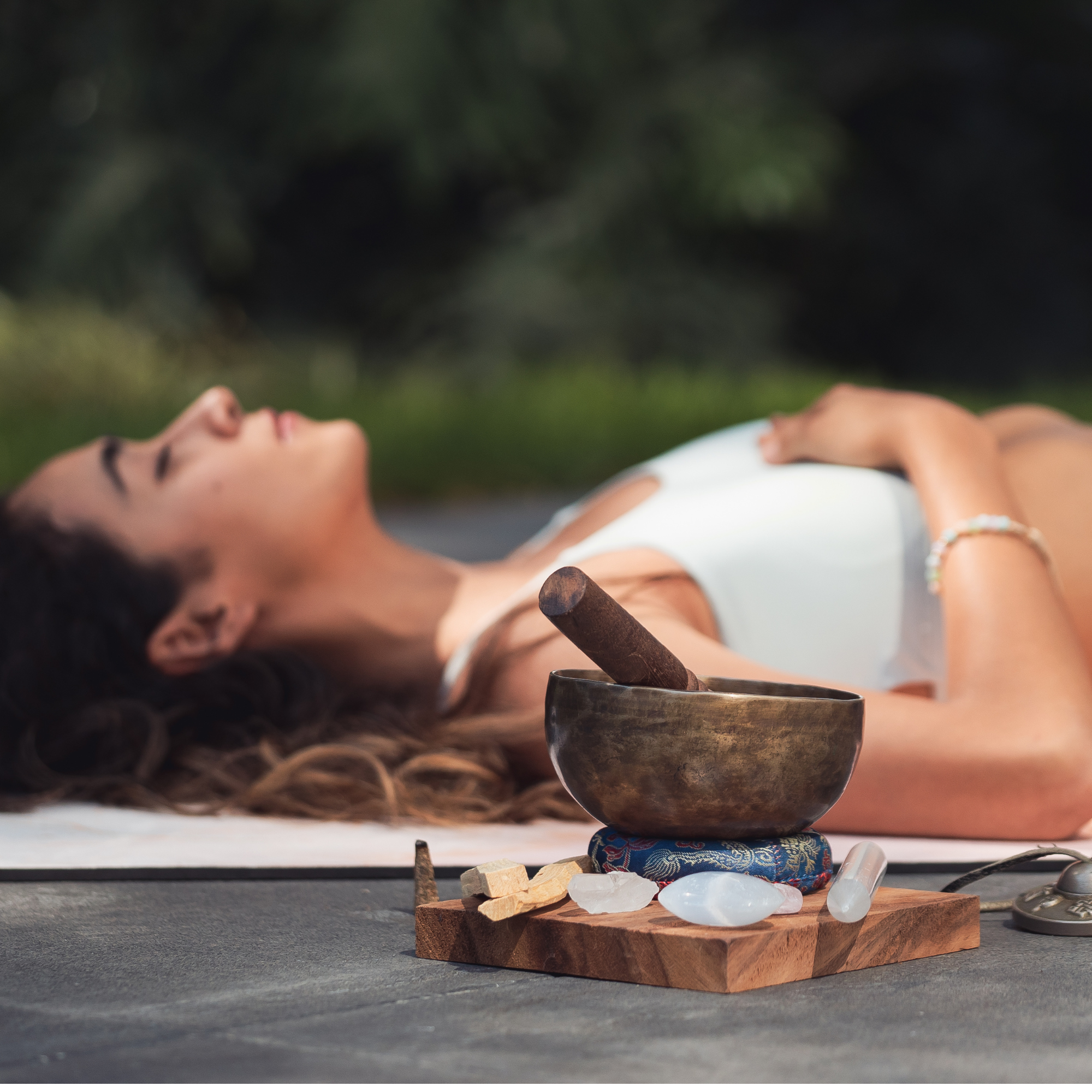
Yoga Nidra is a guided practice of deep rest. It is sometimes translated as “yogic sleep,” but it is not exactly the same as ordinary sleep. Instead, Yoga Nidra invites the body and mind into a state between waking and sleeping — a place where the body can soften, the nervous system can settle, and awareness can remain gently present.
In a culture that often values productivity over restoration, Yoga Nidra offers something deeply needed: permission to rest without having to do, fix, accomplish, or improve anything.
It is a practice of receiving.
What Is Yoga Nidra?
Yoga Nidra is typically practiced lying down in a comfortable position, often supported with blankets, bolsters, or pillows. A teacher or recording guides you through a sequence of awareness practices that may include the body, breath, senses, emotions, imagery, and inner intention.
The goal is not to “try hard” or force relaxation. In fact, Yoga Nidra works best when we stop trying to make something happen.
The body rests.
The breath softens.
The mind is guided.
Awareness remains.
This makes Yoga Nidra especially helpful for people who feel exhausted but have a hard time settling, meditating, or falling asleep.
Conscious Rest for the Nervous System
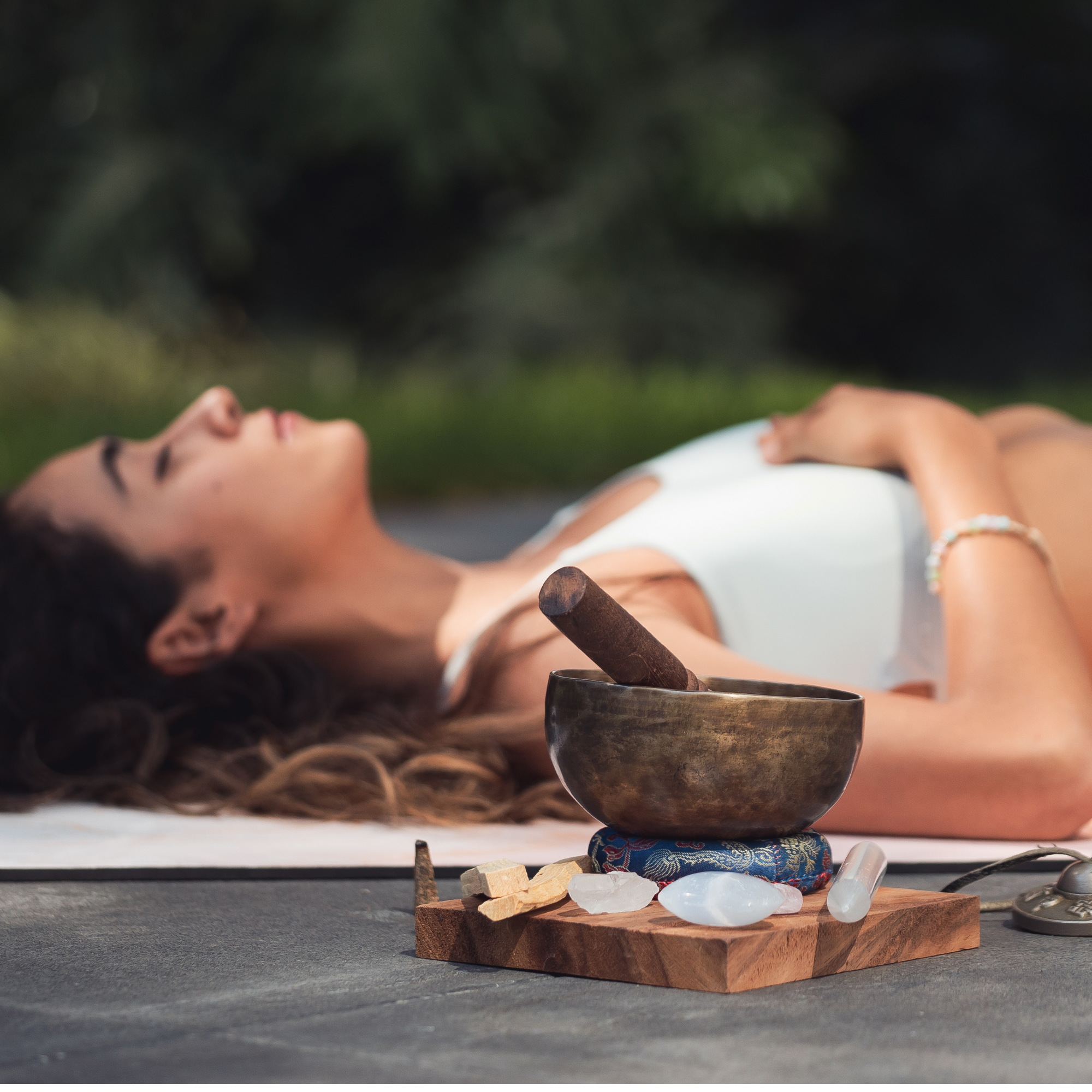
Many people live with a nervous system that is carrying too much. Stress, caregiving, grief, work demands, hormonal changes, sensory overload, trauma, and constant stimulation can leave the body feeling tired but wired.
Yoga Nidra gives the nervous system a structured pathway into rest.
Rather than telling the body to calm down, the practice gently leads the body into a felt experience of safety. The mind has something simple to follow, which can help reduce rumination. The body is allowed to be still. The breath becomes a bridge between awareness and relaxation.
Over time, Yoga Nidra can become a familiar inner pathway back to steadiness.
Yoga Nidra and Ayurveda
From an Ayurvedic perspective, Yoga Nidra is especially supportive for restoring balance when the body is depleted, overstimulated, or disconnected from natural rhythm.
Ayurveda teaches that rest is essential for rebuilding ojas — the subtle essence of vitality, immunity, resilience, and inner steadiness. When ojas is strong, we tend to feel nourished, grounded, emotionally steady, and able to recover from life’s demands. When ojas is depleted, we may feel fragile, restless, dry, anxious, exhausted, or easily overwhelmed.
Yoga Nidra helps create the conditions for ojas to be replenished.
It is not a replacement for sleep, food, or healthy daily rhythm, but it can beautifully support all three.
Yoga Nidra for Vata Imbalance
Yoga Nidra is particularly helpful when Vata is high.
Vata is associated with movement, change, dryness, lightness, the nervous system, and the mind. When Vata becomes aggravated, we may experience racing thoughts, worry, anxiety, insomnia, restlessness, irregular routines, or a feeling of being ungrounded.
Yoga Nidra offers Vata what it needs most:
Stillness
Warmth
Repetition
Containment
Safety
Grounded awareness
A regular Yoga Nidra practice can help the body remember how to soften.
For Vata, it is often helpful to practice with warmth and support: lie under a blanket, cover the eyes, support the knees, and make sure the body feels completely held.
Yoga Nidra for Pitta Imbalance
Yoga Nidra can also support Pitta imbalance, especially when the mind is intense, driven, or unable to turn off.
Pitta is associated with heat, focus, transformation, ambition, and sharpness. When Pitta is elevated, sleep may be interrupted by problem-solving, perfectionism, irritation, heat, or waking in the middle of the night with the mind already working.
Yoga Nidra helps Pitta soften from effort into surrender.
For Pitta, the practice is most supportive when it emphasizes cooling imagery, spaciousness, compassion, and permission to stop doing. The body does not need to perform rest. It can simply receive it.
Yoga Nidra for Kapha Imbalance
For Kapha, Yoga Nidra can be supportive, but the approach may need to be slightly different.
Kapha is associated with heaviness, stability, moisture, nourishment, and structure. When Kapha is balanced, it provides endurance and calm. When Kapha is excessive, there may be sluggishness, fogginess, oversleeping, low motivation, or emotional heaviness.
For Kapha patterns, Yoga Nidra may be most helpful when practiced earlier in the day rather than late at night. A shorter, brighter practice can help refresh the mind without increasing heaviness.
For Kapha, Yoga Nidra can become a reset rather than an escape.
Is Yoga Nidra the Same as Meditation?
Yoga Nidra and meditation are related, but they are not exactly the same.
Many forms of meditation are practiced seated and require a certain amount of alertness and upright attention. Yoga Nidra is usually practiced lying down, with the body fully supported. The guidance carries the practitioner through the experience, making it accessible even when the mind feels busy or the body feels exhausted.
For people who struggle with seated meditation, Yoga Nidra can be a compassionate doorway into inner stillness.
You do not have to empty your mind.
You do not have to sit perfectly still.
You do not have to be “good” at relaxing.
You simply listen, receive, and return when you drift away.
What If I Fall Asleep?
Falling asleep during Yoga Nidra is common, especially in the beginning. It does not mean you are doing it wrong.
Sometimes the body takes the rest it needs.
Over time, you may find that you can remain in a state that is deeply restful but still aware. Other times, you may sleep through most of the practice. Both can be useful.
The practice is not about perfection. It is about building a relationship with rest.
When to Practice Yoga Nidra
Yoga Nidra can be practiced at different times depending on your needs.
Before Bed
This can help create a bridge from the activity of the day into sleep. Choose a calming practice and allow yourself to drift afterward.
In the Afternoon
A short Yoga Nidra practice can be a beautiful alternative to pushing through fatigue with caffeine or sugar. Even 10–20 minutes may help you feel more grounded and restored.
During Stressful Seasons
During times of grief, transition, overwhelm, hormonal change, caregiving, or recovery, Yoga Nidra can offer a steady place to return.
When Sleep Is Disrupted
Yoga Nidra can be helpful when you wake during the night and cannot fall back asleep. Rather than struggling against wakefulness, a gentle practice can help the body rest even if sleep does not come immediately.
How to Prepare for Yoga Nidra
The most important thing is comfort.
Before you begin:
Lie down on your back or another comfortable position
Place a bolster or pillow under your knees
Cover yourself with a blanket
Use an eye pillow if that feels soothing
Keep the room warm enough
Silence notifications
Let the body feel fully supported
You may also want to place one hand on your heart and one hand on your belly before beginning. Take a few breaths and let the body know: there is nowhere else to be right now.
A Simple Yoga Nidra-Inspired Rest Practice
If you do not have time for a full guided practice, try this short rest ritual:
Lie down and support your body.
Feel the back of your body touching the ground.
Notice the breath moving in and out.
Bring awareness to your right hand.
Your left hand.
Your right foot.
Your left foot.
Your belly.
Your heart.
Your throat.
Your face.
Let the jaw soften.
Let the eyes rest.
Let the belly receive the breath.
Silently repeat:
I am safe to rest.
I do not have to hold the whole day.
I can return to myself.
Stay for three to ten minutes.
When you are ready, deepen the breath, move slowly, and return gently.
Yoga Nidra as a Practice of Returning
Yoga Nidra is not about escaping life. It is about returning to the body with kindness.
It teaches us that rest is not laziness. Rest is not weakness. Rest is not something we must earn by becoming exhausted first.
Rest is a biological need, a spiritual practice, and a pathway back to wholeness.
Through Yoga Nidra, we learn to listen to the body beneath the noise of the day. We remember the quiet place inside that is still present, even when life feels full.
One breath at a time.
One layer of softening at a time.
One practice of conscious rest at a time.
An Invitation to Rest
At Conscious Nectar, Yoga Nidra is part of a larger approach to restoring rhythm, calming the nervous system, and supporting deep nourishment through Ayurveda, yoga, herbs, and daily ritual.
Whether you are navigating stress, sleep changes, hormonal transitions, depletion, or simply the need to pause, Yoga Nidra can become a gentle companion on the path back to balance.
You do not have to wait until you are completely exhausted to rest.
You can begin now.