
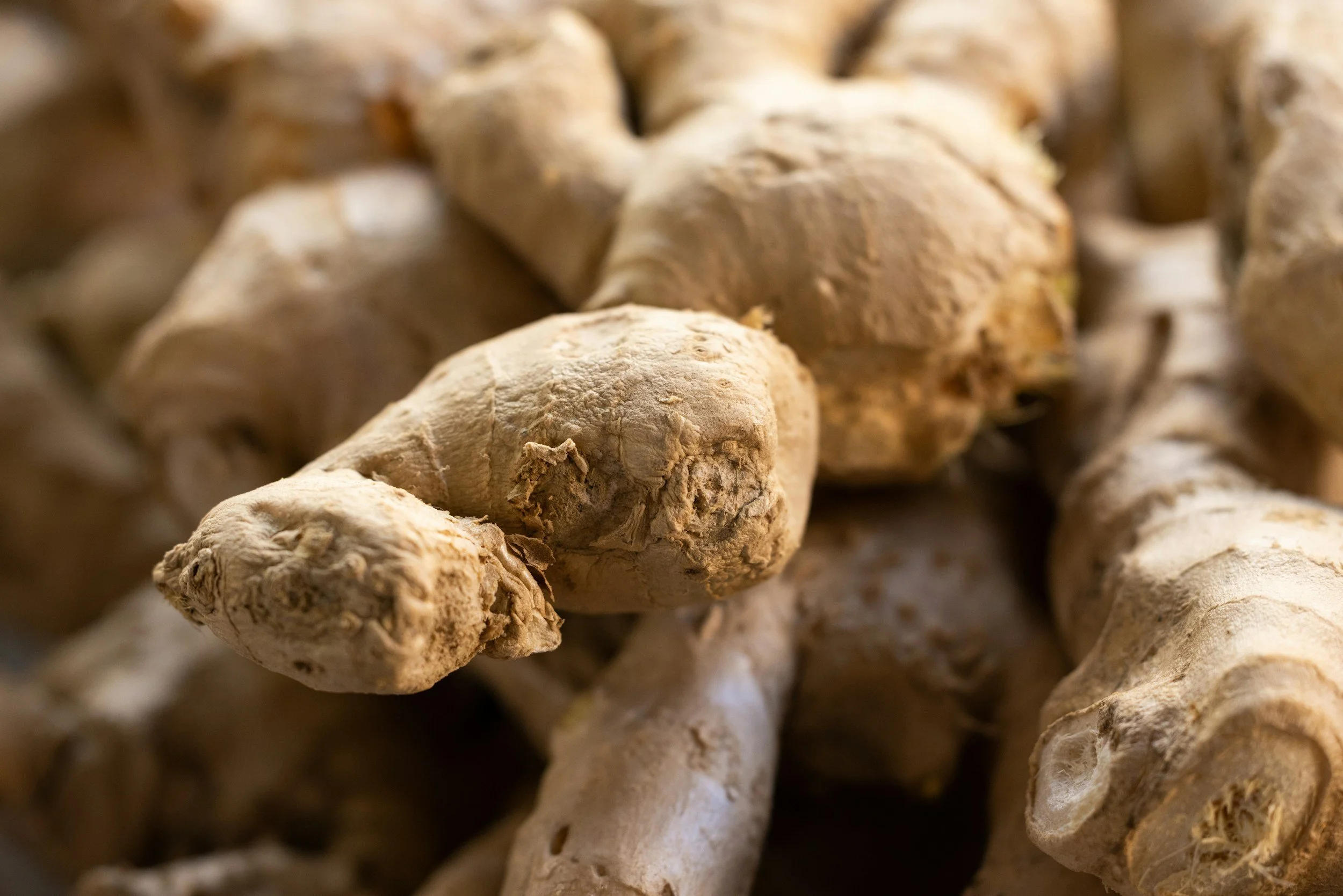
Ginger is one of winter’s great allies—not because it stimulates or pushes, but because it restores warmth where it matters most.
In both Ayurveda and traditional herbal medicine, ginger is revered for its ability to awaken agni—the digestive fire—without exhausting the system. During winter, digestion naturally slows, circulation becomes more inward, and cold can settle into the joints and tissues. Ginger meets this moment with steady, penetrating warmth.
Rather than acting fast and fading, ginger works by supporting the body’s own intelligence.
Why Ginger Shines in Winter
Encourages healthy digestion and assimilation
Supports circulation and internal warmth
Helps clear heaviness and stagnation
Comforting for joints and muscles in cold weather
Gently supportive to immunity and resilience
From an Ayurvedic lens, ginger is especially helpful for balancing Vata and Kapha, the doshas most active during winter. It counters cold and dampness while remaining grounding enough for daily use.
Fresh vs. Dried Ginger
Both forms have their place:
Fresh ginger is slightly more moistening and soothing—wonderful for teas, broths, and cooking
Dried ginger is hotter and more penetrating—often used in digestive blends and formulas
Listening to your body will guide which form feels best.
A Simple Winter Ginger Ritual
Try sipping warm ginger tea in the morning or between meals:
Fresh sliced ginger
Simmer gently for 10–15 minutes
Sip slowly, allowing warmth to spread from the center outward
This small habit alone can support digestion, circulation, and energy throughout the day.
Ginger as a Winter Teacher
Ginger reminds us that warmth doesn’t have to be dramatic to be effective.
Steady. Present. Consistent.
In winter, this kind of medicine goes a long way.